The Rise of K-Beauty: How Korean Skincare Took Over the World
What Is K-Beauty and Where Did It Come From?
K-beauty, short for Korean beauty, refers to the skincare and cosmetic practices, products, and philosophies originating from South Korea. It is defined less by a single product category and more by a holistic approach to skin health — one that has been cultivated in Korean culture for centuries.
South Korea's relationship with skincare runs deep. Confucian values historically emphasized presenting oneself with care and respect, and the Korean royal court of the Joseon dynasty was already formulating rice water and herbal preparations for luminous skin. Modern K-beauty, however, took shape in the late 20th century when South Korea invested heavily in cosmetic research and development, producing an industry known for rapid innovation and rigorous formulation standards.
By the early 2000s, Korean beauty brands were exporting products across Asia. By the 2010s, the rest of the world was paying attention. What started as a regional phenomenon had become a global conversation about how we care for our skin — and why.
The Hallyu Effect — How Culture Paved the Way for Beauty
The global spread of K-beauty owes a significant debt to Hallyu, the Korean Wave — the surge of Korean cultural exports including K-pop music, K-dramas, and Korean cinema that swept through Asia and eventually reached Western audiences. Culture, it turns out, is one of the most powerful beauty marketing tools in existence.
When audiences around the world began watching Korean dramas and following K-pop artists, they noticed something: the skin. Actors and idols consistently displayed a radiant, poreless, almost luminous complexion that felt different from Western beauty ideals. Fans wanted to know the secret.
Social media accelerated this curiosity dramatically. Beauty influencers on YouTube and Instagram began reviewing Korean products, demonstrating multi-step routines, and introducing Western audiences to ingredients and formats they had never encountered. The hashtag became a gateway. A sheet mask unboxing video could rack up millions of views, turning niche imports into mainstream must-haves almost overnight.
Hallyu didn't just sell products — it sold an aesthetic and a lifestyle. That combination proved irresistible.
The Skin-First Philosophy That Changed Everything
At the heart of K-beauty is a philosophy that prioritizes skin health over cosmetic concealment. The goal is not to cover imperfections with foundation — it is to cultivate skin that doesn't need covering in the first place.
This stands in sharp contrast to how Western beauty culture traditionally operated. For decades, the Western approach leaned heavily on makeup as the primary tool: thicker coverage, longer-lasting formulas, and products designed to mask rather than treat. K-beauty flipped that logic entirely.
The Korean concept of chok-chok — describing skin that is so well-hydrated it appears bouncy and almost elastic — captures this philosophy perfectly. Chok-chok skin isn't achieved with a highlighter; it's the result of consistent, layered hydration over time. This shift in mindset resonated with consumers who were growing tired of heavy coverage and increasingly interested in what was actually happening beneath the surface.
The skin-first approach also aligned naturally with the growing clean beauty movement, as consumers began scrutinizing ingredient lists and demanding transparency from brands. K-beauty's emphasis on gentle, functional formulations made it an easy fit for this new consumer consciousness.
Iconic K-Beauty Trends That Went Global
Several K-beauty practices didn't just influence global beauty — they fundamentally reshaped it. These are the trends that crossed every cultural and geographic boundary.
The 10-step skincare routine is perhaps the most talked-about export. The concept of layering multiple products — cleanser, toner, essence, serum, ampoule, sheet mask, eye cream, moisturizer, and SPF — seemed extreme to Western audiences accustomed to a three-step regimen. But it reframed skincare as self-care ritual rather than chore, and millions adopted at least elements of it. You don't need all ten steps; even incorporating three or four K-beauty principles into an existing routine can produce visible results.
Sheet masks became a cultural phenomenon in their own right. Single-use, serum-soaked fabric masks designed to deliver concentrated hydration in 15-20 minutes went from a Korean pharmacy staple to a global retail category worth billions. Their accessibility, variety, and Instagram-friendly format made them the perfect entry point for consumers new to K-beauty.
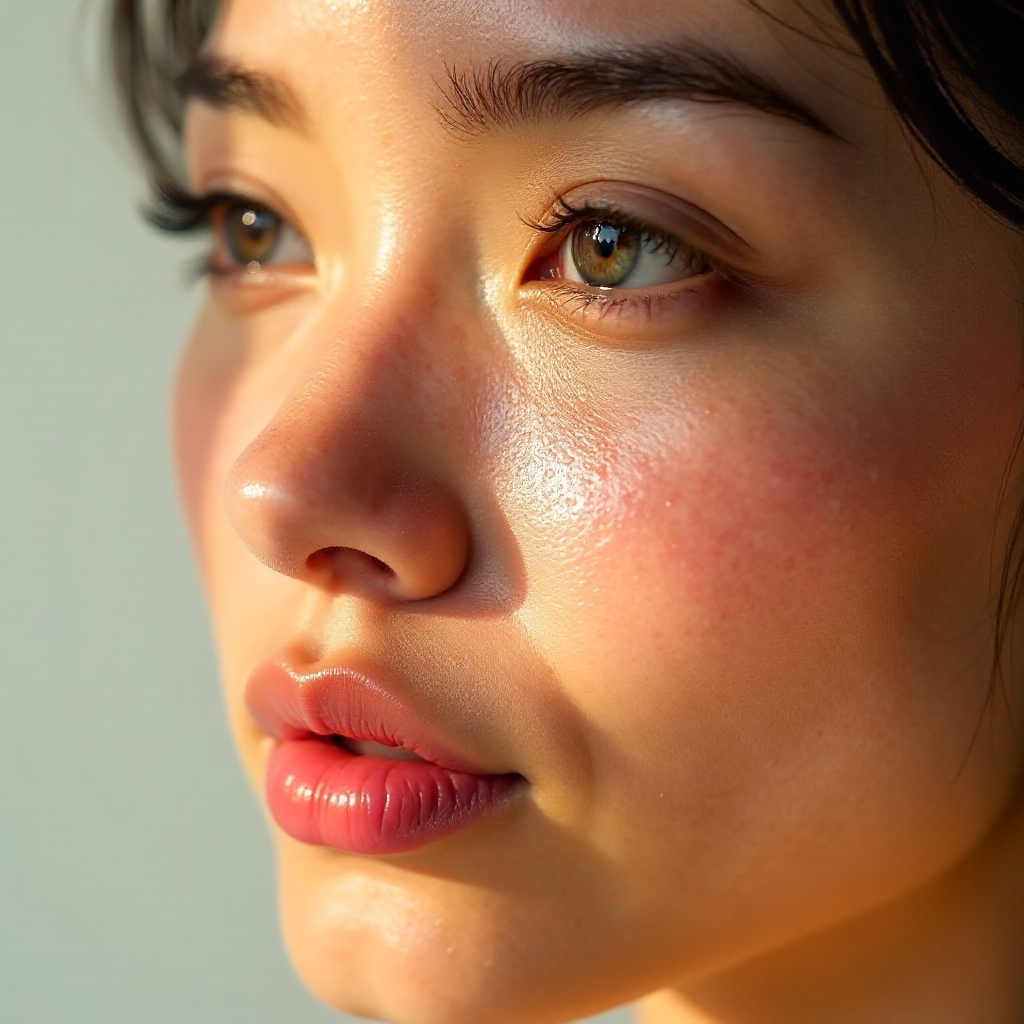
The glass skin aesthetic — that ultra-smooth, reflective, dewy complexion — became the defining beauty goal of the mid-2010s and remains aspirational today. Cushion compacts, another Korean innovation, offered a portable, SPF-infused foundation in a sponge format that delivered the dewy finish glass skin demands. Western brands quickly followed with their own versions.
Hero Ingredients Driving the K-Beauty Revolution
K-beauty introduced the global skincare market to ingredients that were either unknown or underutilized in Western formulations. These ingredients now appear on labels worldwide.
- Snail mucin — secreted by snails as a skin-repair mechanism, this ingredient is rich in glycoproteins, hyaluronic acid, and glycolic acid. It became one of K-beauty's most distinctive calling cards, celebrated for its ability to support skin regeneration and hydration.
- Centella asiatica — also known as cica or tiger grass, this botanical extract has a long history in traditional Asian medicine. In K-beauty formulations, it's prized for calming irritated skin and reinforcing the skin barrier — making it ideal for sensitive skin types.
- Niacinamide — while not exclusive to K-beauty, niacinamide (vitamin B3) became mainstream largely through K-beauty's ingredient-forward marketing. It addresses uneven skin tone, enlarged pores, and fine lines simultaneously.
- Fermented extracts — fermentation is a cornerstone of Korean culture, and K-beauty applied it to skincare. Fermented ingredients like galactomyces and bifida ferment lysate are thought to increase bioavailability and deliver antioxidant and brightening benefits.
What unites these ingredients is their functional specificity. K-beauty brands built their reputations on explaining exactly what an ingredient does and why it's in the formula — a level of transparency that ingredient-conscious consumers around the world found refreshing.
How K-Beauty Is Reshaping the Global Beauty Industry
The global beauty industry has responded to K-beauty's rise not just by stocking Korean brands, but by absorbing K-beauty thinking into its own product development. The influence is now structural, not superficial.
Major Western beauty conglomerates began acquiring Korean brands and licensing Korean formulation technologies. Formats pioneered in Seoul — cushion compacts, sleeping masks, essence-toners, ampoules — are now standard offerings from brands that had no Korean heritage whatsoever. The 10-step routine logic influenced how brands built product ecosystems, encouraging consumers to use multiple products from the same line in sequence.
Retailers played a critical role. When major beauty retailers in the US and Europe dedicated entire sections to K-beauty, they signaled to the industry that this was not a niche trend. It was a category. That retail legitimacy accelerated adoption among consumers who might never have sought out Korean brands independently.
Perhaps the deepest impact has been philosophical. The skin-first, ingredient-forward, hydration-obsessed approach that K-beauty championed has become the dominant language of modern skincare marketing globally. Even brands with no connection to Korea now speak in terms of skin barriers, hydration layers, and active ingredients — a vocabulary K-beauty helped popularize.
What's Next — The Future of K-Beauty's Global Influence
K-beauty's influence is not plateauing — it is evolving. The next wave builds on the foundation already established while pushing into new territory.
Skinimalism, the trend toward fewer, more effective products, is reshaping how K-beauty presents itself to a new generation of consumers. Rather than the full 10-step routine, the emphasis is shifting toward multi-functional products that deliver layered benefits in a single step — without sacrificing the skin-health philosophy at the core.
Microbiome science is emerging as the next frontier. Korean brands are leading research into how fermented ingredients and probiotic-adjacent formulations support the skin's natural ecosystem — a direction that aligns perfectly with K-beauty's existing fermentation heritage.
Sustainability is also entering the equation. The sheet mask category, for all its success, generates significant single-use waste. Korean brands are responding with biodegradable formats, refillable packaging, and waterless formulations — adapting K-beauty's innovation culture to meet new consumer expectations.
What makes K-beauty's global influence durable is that it was never really about products. It was about a different way of thinking about skin — patient, consistent, ingredient-aware, and rooted in the belief that healthy skin is the ultimate beauty goal. That idea has no expiration date.
Frequently Asked Questions
What makes K-beauty different from Western skincare?
K-beauty prioritizes long-term skin health over immediate cosmetic coverage. Western skincare traditionally focused on correcting problems; K-beauty focuses on preventing them through consistent hydration, barrier support, and layered care. The result is a routine-based, ingredient-conscious approach that treats skin as something to nurture rather than conceal.
Do you need to follow all 10 steps of a K-beauty routine?
No. The 10-step routine is a framework, not a prescription. Most people benefit from adopting three to five steps — typically a gentle cleanser, a hydrating toner or essence, a targeted serum, a moisturizer, and SPF. The principle matters more than the number: layer products from lightest to heaviest and give each one time to absorb.
What are the most popular K-beauty ingredients to look for?
Snail mucin, centella asiatica (cica), niacinamide, fermented extracts like galactomyces, and hyaluronic acid are among the most widely celebrated. Each targets specific concerns — hydration, barrier repair, brightening, or soothing — making it easier to choose based on your skin's actual needs.
Is K-beauty suitable for all skin types?
Generally, yes. K-beauty's emphasis on gentle formulations and barrier support makes it particularly well-suited to sensitive and combination skin. Those with oily skin may want to choose lighter textures — gel-based moisturizers and water essences rather than heavy creams — but the core philosophy of skin health applies universally.
How has K-beauty influenced mainstream beauty brands?
Mainstream brands have adopted K-beauty formats (cushion compacts, sleeping masks, essence-toners), incorporated K-beauty hero ingredients into their formulations, and shifted their marketing language toward skin health, hydration, and ingredient transparency. The influence is now so embedded in the global industry that many consumers encounter K-beauty principles without realizing their origin.