Seasonal Skincare: How to Adjust Your Routine for Winter and Summer
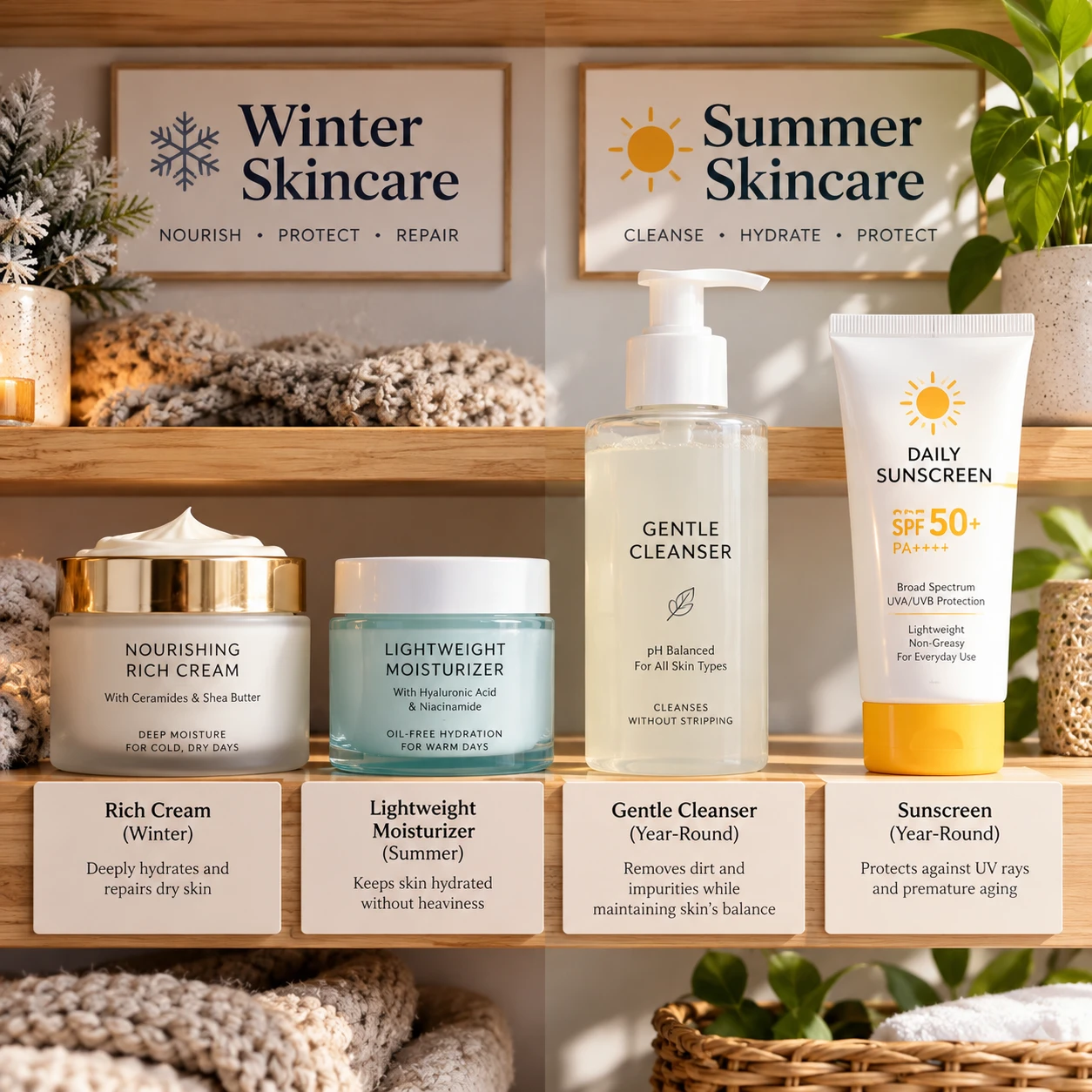
Your skincare routine may need a few changes as the seasons shift, but it rarely needs a complete overhaul. Cold air, indoor heating, humidity, sweat, and UV exposure can all affect how your skin feels and behaves. Use those changes as cues to adjust textures and frequency while keeping the basics steady.
Why skincare needs change with the seasons
Seasonal skincare changes because temperature, humidity, indoor heating, and sun exposure can influence moisture loss, oiliness, and skin comfort. The right routine responds to your local climate and your skin, rather than following a fixed calendar.
In winter, cold outdoor air and heated indoor spaces can feel drying. When the air is less humid, water can evaporate from the skin more readily, leaving it tight or flaky. The skin barrier, which helps keep moisture in and irritants out, may feel less comfortable if cleansing or exfoliation is too harsh.
Summer often brings higher humidity, heat, and more sweating. Some people notice more shine or clogged-feeling pores, while others still experience dryness or irritation. More time outdoors can also mean greater UV exposure, making sunscreen and reapplication especially important.
These are tendencies, not rules. A humid winter, dry summer, air conditioning, travel, and indoor heating can all change what your skin needs. Watch how your skin responds instead of switching products simply because the season has changed.
Winter skincare adjustments
In winter, use a gentle cleanser, add a richer moisturizer if your skin feels dry, and reduce sources of irritation when the skin barrier feels stressed. Protect exposed skin from cold, wind, and dry indoor air.
Start with cleansing. If your face feels tight after washing, try a mild, non-stripping cleanser and use lukewarm rather than hot water. You may not need to cleanse as often in the morning; rinsing with water can be enough for some people. Avoid scrubbing away flakes, which can make irritation worse.
For hydration, look for a moisturizer that combines humectants, such as glycerin or hyaluronic acid, with emollient and occlusive ingredients. Humectants attract water, while occlusives help slow water loss. A richer cream may suit dry areas, but a lighter lotion can still work well for oily or combination skin. Apply moisturizer after washing, while skin is slightly damp.
If cheeks or hands become uncomfortable outdoors, cover them with clothing where practical and apply moisturizer before heading out. A humidifier may help if indoor air is very dry, though it needs regular cleaning. Keep sunscreen in your winter routine, especially on bright days or when spending time outside.
Be cautious with exfoliation. If you have new stinging, persistent tightness, or increased flaking, pause exfoliating acids or scrubs until your skin feels settled. More product is not always more protection; layering several strong actives can add irritation without solving the underlying dryness.
Summer skincare adjustments
In summer, keep hydration but consider lighter textures, cleanse away sweat and sunscreen, and use broad-spectrum sunscreen consistently. Adjust oil-control steps gently so they do not leave your skin dry or irritated.
A lightweight gel or lotion moisturizer may feel more comfortable in heat and humidity, but do not skip moisturizer automatically if your skin still feels tight. You can choose a formula that absorbs quickly while providing humectants and barrier-supporting ingredients. If you sweat heavily, rinse or cleanse after exercise; otherwise, a gentle evening cleanse can remove sunscreen, makeup, and daily buildup.
Shine does not always mean your skin needs aggressive cleansing. Harsh cleansers and frequent exfoliation can disrupt the skin barrier, even when the weather is hot. If you use exfoliating products, keep the frequency that your skin tolerates rather than increasing it to chase a matte finish.
Sunscreen is essential when you spend time outdoors. Choose a broad-spectrum product with SPF 30 or higher, apply it to exposed skin, and reapply as directed on the label, especially after swimming, sweating, or towel-drying. A hat, sunglasses, shade, and protective clothing add useful coverage. Sunscreen does not prevent every effect of sun exposure, so combine it with those practical measures.
For guidance on choosing and using sunscreen, see the American Academy of Dermatology’s sunscreen advice. If sunscreen feels heavy, try a different texture rather than dropping the step; a product you will apply generously is more useful than one that stays unused.

Routine essentials to keep year-round
A year-round skincare routine can stay simple: gentle cleansing, a moisturizer suited to your skin, and daily sunscreen. You can adjust the texture or timing of these steps without abandoning the foundation.
Gentle cleansing removes sweat, sunscreen, makeup, and excess oil without leaving skin uncomfortable. Choose a cleanser that rinses clean and does not make your face feel tight. If you wear water-resistant sunscreen or makeup, an oil-based first cleanse followed by a gentle cleanser may help, but it is optional.
Moisturizing supports comfort and helps reduce moisture loss. The formula can change with the climate: a lighter lotion may be pleasant in humid weather, while a cream may feel better in cold, dry conditions. Focus on how your skin feels several minutes after application, not just the product’s label.
Sunscreen remains part of daytime care across seasons. Cloud cover and cooler temperatures do not mean there is no UV exposure. Keep the application amount and reapplication appropriate to the label and your time outdoors. If you have a skin condition or a specific concern about sun protection, ask a qualified healthcare professional for personalized advice.
How to transition your routine
To transition your skincare routine, change one product or habit at a time and observe your skin for a week or two. Gradual adjustments make it easier to identify what helps and what causes irritation.
Use a simple seasonal check-in:
- Notice the signal: Is your skin tight, flaky, shiny, or uncomfortable after cleansing? Does sunscreen feel too heavy, or does your usual moisturizer no longer feel sufficient?
- Adjust one variable: Change the cleanser, moisturizer texture, or exfoliation frequency first. Avoid replacing every product at once.
- Give it time: Keep the rest of your routine stable while you assess comfort and tolerance. Stop a new product if it causes a clear reaction.
- Reassess the climate: Indoor heating, air conditioning, and travel can matter as much as the season outside.
For example, if your face feels tight after washing in late fall, first try a gentler cleanser or a richer moisturizer. If the discomfort continues, review exfoliation and other active ingredients rather than adding several new products. This measured approach limits guesswork and unnecessary spending.
Tailor seasonal care to your skin
The best seasonal routine depends on your skin type, sensitivity, concerns, and environment. Dry, oily, combination, and sensitive skin can all respond differently to the same weather, so use comfort and tolerance to guide product choices.
Dryness and dehydration are related but not identical. Dry skin usually describes a skin type that produces less oil; dehydrated skin describes a lack of water and can affect many skin types. Tightness can occur with either, so consider the broader pattern and how your skin responds to moisturizer and cleansing.
If you are oily, a lightweight moisturizer can still support the skin barrier without a heavy feel. If you are sensitive, introduce new products slowly and favor gentle formulas. People who use prescription treatments, have persistent irritation, or manage a skin condition may need advice from a dermatologist rather than a standard seasonal adjustment.
Think of seasonal skincare as a dial, not a switch: keep the core routine, then turn texture, cleansing, and exfoliation up or down according to your skin’s response. That flexibility is more useful than a strict winter-versus-summer rule.
Seasonal skincare FAQs
Should I use a different moisturizer in winter and summer?
You may prefer a richer moisturizer in winter and a lighter one in summer, but you do not have to change if your current formula remains comfortable. Skin type, humidity, and indoor climate matter more than the month.
Do I need sunscreen in winter?
Yes. Use sunscreen on exposed skin when you spend time outdoors, including in winter. Broad-spectrum SPF 30 or higher is a practical choice; follow the label for application and reapplication.
How can I tell if my skin is dehydrated or dry?
Dryness generally refers to low oil production, while dehydration refers to a lack of water. They can feel similar, and both may cause tightness or roughness. If symptoms persist or worsen, seek advice from a dermatologist.
Should I exfoliate less in winter?
Reduce or pause exfoliation if winter weather leaves your skin tight, flaky, stinging, or irritated. If your skin remains comfortable, you may not need to change your frequency; avoid increasing it simply to remove dryness or shine.