Morning vs. Night Skincare: What’s the Difference?
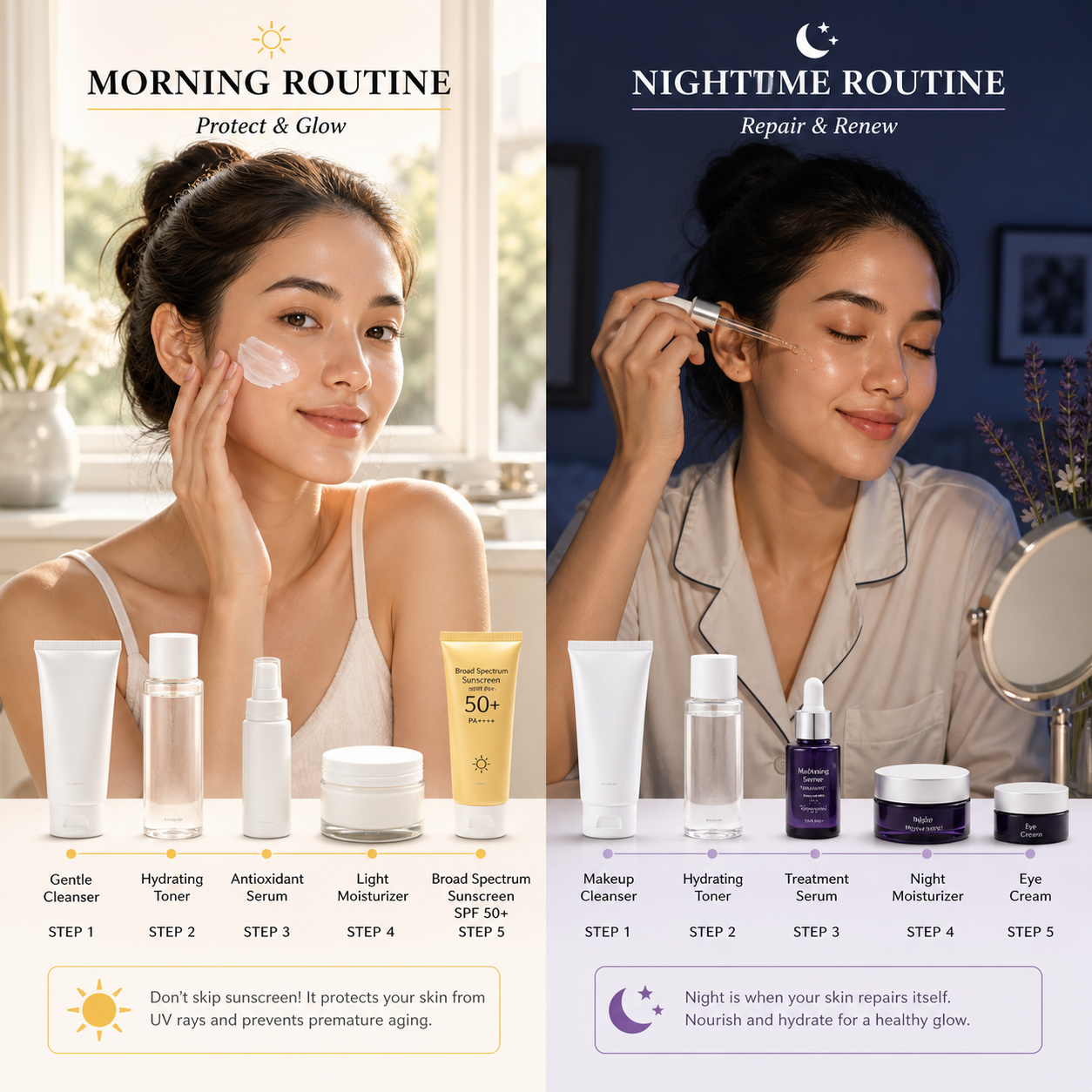
Morning and night skincare routines have different jobs. Morning skincare protects your skin from environmental exposure, while nighttime skincare removes buildup and supports treatment, hydration, and skin barrier care.
You do not need a long shelf of products to benefit from both routines. A gentle cleanser, moisturizer, and broad-spectrum sunscreen form the foundation; targeted products such as vitamin C, retinol, or a chemical exfoliant are optional additions chosen according to your skin type and goals.
Morning vs. night skincare at a glance
Morning skincare focuses on protection, and night skincare focuses on cleansing, treatment, and replenishment. The products can overlap, but the timing changes how you prioritize them.
During the day, skin encounters ultraviolet radiation, pollution, heat, wind, and frequent touching. A morning skincare routine prepares the skin for those conditions. Antioxidants may help support the skin against environmental stress, while sunscreen reduces exposure to ultraviolet A and ultraviolet B radiation.
At night, the priority shifts. Makeup, sunscreen, oil, sweat, and particulate matter need to be removed. The evening is also the practical time for treatments that can increase sun sensitivity or cause temporary dryness, including many retinoids and chemical exfoliants.
- AM goal: cleanse gently, add optional antioxidant support, moisturize, and protect with sunscreen.
- PM goal: remove makeup and sunscreen, cleanse, apply a suitable treatment, and support the skin barrier with moisturizer.
- Both routines: should be comfortable, consistent, and adjusted when irritation appears.
Think of the two routines as a daily cycle: the morning builds a shield, and the night resets the surface. Neither routine has to be complicated to work well.
What to use in a morning skincare routine
Apply morning skincare in this order: cleanse, treat, moisturize, then finish with broad-spectrum sunscreen. If your skin feels comfortable after cleansing, you may use only water or skip a morning cleanse, especially if you have dry or sensitive skin.
1. Cleanser
Use a gentle cleanser to remove overnight sweat, excess oil, and residue from nighttime products. A low-foaming or creamy cleanser often suits dry and sensitive skin, while an uncomplicated gel cleanser may feel better on oily skin.
Cleanse with lukewarm water and your fingertips. Scrubbing harder does not improve cleansing and can leave the skin tight, flaky, or irritated.
2. Antioxidant serum
An antioxidant serum is optional, but it can be useful for people who want additional support against daily environmental stress. Vitamin C is the best-known example and is commonly used in the morning beneath moisturizer and sunscreen.
Apply a few drops to dry or slightly damp skin, depending on the product directions. Vitamin C formulas vary in strength and stability, so start slowly if your skin is reactive. Store the product as directed and replace it if the formula changes substantially in color, smell, or texture.
3. Moisturizer
Moisturizer reduces water loss and helps maintain a comfortable skin barrier. Choose a lightweight lotion or gel for oily skin, a cream for dry skin, and a fragrance-free formula if sensitivity is an issue.
4. Sunscreen
Sunscreen is the final morning skincare step, applied after moisturizer and before makeup. Choose a broad-spectrum product with SPF 30 or higher, apply enough to cover the face, neck, and other exposed areas, and reapply during extended outdoor exposure, sweating, or swimming.
Sunscreen does not replace a hat, shade, or protective clothing. If you wear makeup, a sunscreen base is usually more reliable than trying to apply enough protection through a cosmetic product alone. Guidance from the American Academy of Dermatology can help with application and reapplication basics.
What to use in a night skincare routine
A night skincare routine should remove makeup and sunscreen, cleanse the skin, apply one appropriate treatment, and finish with moisturizer. The evening is also the best time to simplify if your skin feels dry, stings, or looks inflamed.
1. Remove makeup and sunscreen
If you wear makeup or water-resistant sunscreen, begin with a cleansing balm, oil cleanser, micellar water, or another suitable remover. Follow with a gentle cleanser if the first product leaves residue or if you need a more thorough cleanse.
Double cleansing is a tool, not a rule. It may help remove long-wear products, but using two strong cleansers every night can be excessive for dry or sensitive skin.
2. Cleanser
Cleanse until the skin feels clean but not squeaky. Tightness after washing often signals that the cleanser, water temperature, or cleansing frequency is too aggressive.
3. Targeted treatment
Night is a practical time for a retinoid or retinol, an acne treatment, or a chemical exfoliant. Apply one main active treatment at a time unless a dermatologist has given you a specific plan. Retinoids can cause dryness and irritation when introduced too quickly, so begin with a small amount once or twice weekly and increase only as tolerated.
4. Moisturizer
Finish with a moisturizer that supports the skin barrier. Ingredients such as ceramides, glycerin, squalane, and petrolatum can help reduce water loss, although the ideal formula depends on your skin type and preference.
On nights when you use a retinoid or exfoliant, moisturizer can be applied before the active if you are sensitive. This buffering approach may reduce irritation, though it can also make the treatment feel less intense.
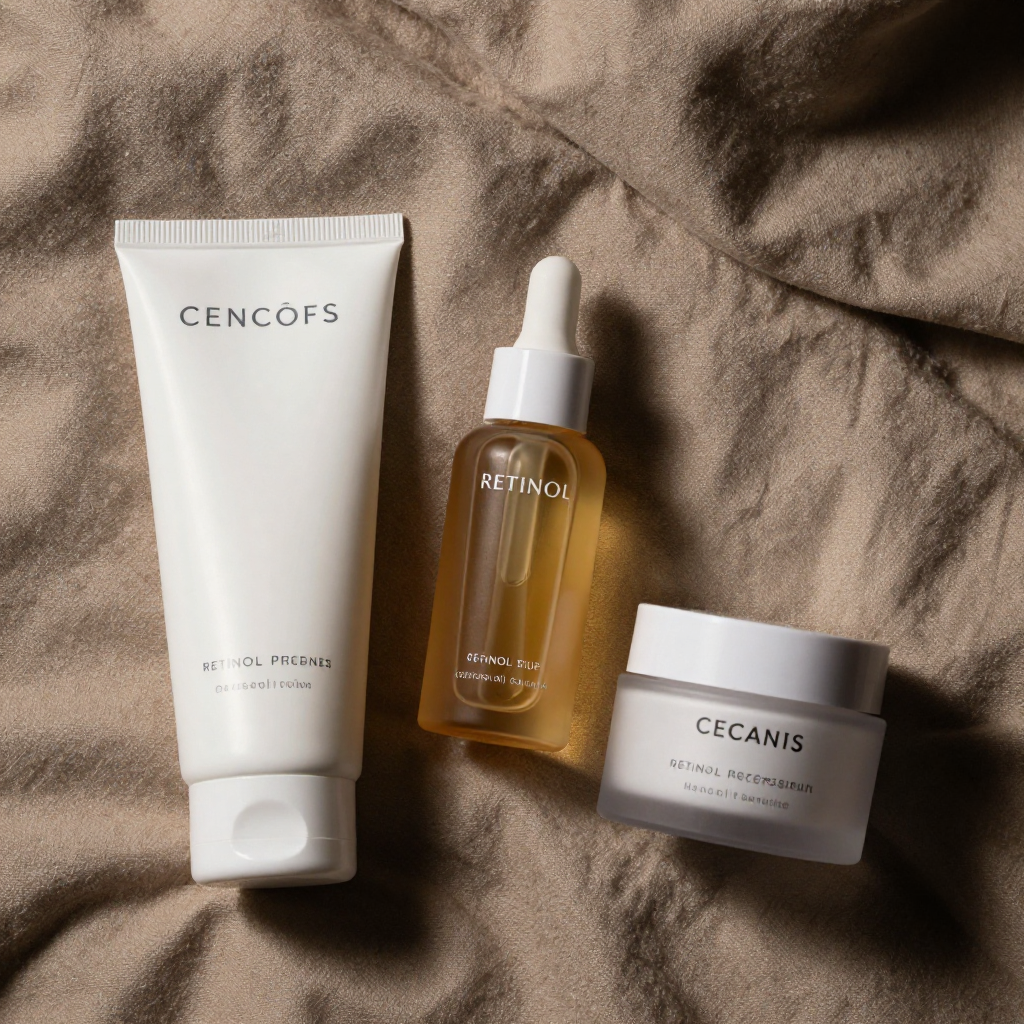
Key product differences between AM and PM routines
The main product difference is sunscreen in the morning and stronger treatment products at night. Vitamin C can fit well in the daytime, while retinoids and exfoliants usually require more cautious evening use.
| Product | Common timing | Why it matters |
|---|---|---|
| Cleanser | Morning and night | Removes oil, sweat, makeup, sunscreen, and residue as needed. |
| Vitamin C | Often morning | Provides antioxidant support and pairs well with daily sunscreen. |
| Sunscreen/SPF | Morning and reapplication | Helps protect exposed skin from ultraviolet radiation. |
| Retinoid/retinol | Usually night | Can support cell turnover and address concerns such as uneven texture, but may irritate. |
| Chemical exfoliant | Usually night, occasionally | Helps loosen dead surface cells; overuse can damage the skin barrier. |
| Moisturizer | Morning and night | Helps maintain hydration and barrier comfort. |
Vitamin C and sunscreen can be used in the same morning routine. Retinol does not make sunscreen optional; consistent daytime protection remains important because sun exposure can worsen many visible skin concerns.
Use caution when combining a retinoid with exfoliating acids such as glycolic acid, lactic acid, or salicylic acid. Some people tolerate alternating nights, while others need to choose one active or use each less often. Stinging, persistent redness, peeling, and worsening sensitivity are signs to pause and simplify.
Morning and night routines by skin type
The right morning and night routines depend on skin type, sensitivity, and concerns rather than a universal product list. Start with the smallest routine that keeps your skin clean, comfortable, moisturized, and protected.
Dry skin
Morning: use a gentle cleanser or rinse with water, apply a hydrating serum if desired, use a cream moisturizer, and finish with sunscreen. Night: remove sunscreen carefully, cleanse once, and apply a richer moisturizer. Introduce retinol only after dryness is well controlled.
Oily skin
Morning: choose a gentle gel cleanser, a lightweight moisturizer, and a non-comedogenic sunscreen. Night: cleanse thoroughly enough to remove sunscreen, then use moisturizer even if your skin is oily. Skipping hydration can make the routine feel harsher without solving excess oil.
Combination skin
Use a balanced cleanser and apply different moisturizer amounts to different areas. A lighter layer may suit the forehead and nose, while the cheeks may need more cream. Avoid treating the entire face as if it has one uniform skin type.
Sensitive skin
Keep both routines short and fragrance-free where possible. Patch test new products, introduce one change at a time, and avoid adding retinoids and exfoliants during an active irritation flare. Mineral or sensitive-skin sunscreen may be more comfortable for some people, but texture and tolerability matter most.
Acne-prone skin
Use a gentle cleanser, lightweight moisturizer, and sunscreen labeled non-comedogenic if it feels suitable. Choose one acne-focused active, such as salicylic acid or a retinoid, and follow the product directions. Persistent, painful, or scarring acne deserves evaluation by a qualified healthcare professional.
Common skincare timing mistakes
Most skincare timing mistakes involve too many actives, inadequate sunscreen, or cleansing that is too harsh. Correcting the routine usually means reducing steps rather than buying more products.
Layering products in the wrong order
People often apply moisturizer before a water-based treatment or put sunscreen beneath moisturizer. The practical order is generally thinnest to thickest, with sunscreen last in the morning. Product texture and label instructions can override this general rule.
Combining too many active ingredients
Retinol, vitamin C, exfoliating acids, and acne treatments can all be useful, but using several at once increases the chance of irritation. Add one active, use it consistently for several weeks, and only then consider another.
Skipping sunscreen because the routine includes antioxidants
Vitamin C supports a routine; it does not replace SPF. Cloudy weather and indoor time near windows can still involve ultraviolet exposure, especially if you spend part of the day outside or drive regularly.
Cleansing aggressively
Long scrubbing sessions, hot water, rough cloths, and repeated washing can weaken the skin barrier. Cleanse efficiently, rinse well, pat dry, and moisturize while the skin is still slightly damp.
How to create a simple routine that works
To create a simple skincare routine, begin with cleanser, moisturizer, and sunscreen, then add only one targeted treatment at a time. This approach makes it easier to identify what helps and what causes irritation.
- Set the foundation: choose a gentle cleanser, a comfortable moisturizer, and broad-spectrum SPF 30 or higher.
- Match one treatment to one goal: consider vitamin C for antioxidant support, retinol for a retinoid-based nighttime routine, or a chemical exfoliant for occasional texture and oil management.
- Introduce gradually: use a new active once or twice weekly at first, unless the label or a clinician advises otherwise.
- Watch the skin barrier: reduce frequency when you notice persistent burning, cracking, pronounced peeling, or redness.
- Review after several weeks: judge comfort, consistency, and tolerance before deciding whether the routine needs another product.
FAQ
Can I use the same skincare products morning and night? Yes. Cleanser and moisturizer can often be used in both routines, while sunscreen belongs in the morning and retinoids are usually better suited to nighttime.
Should I use vitamin C in the morning or at night? Vitamin C is commonly used in the morning under sunscreen, although some formulas are designed for nighttime use. Follow the product instructions and stop if irritation develops.
Is retinol better for a nighttime routine? Retinol is generally used at night because it can irritate skin and because daily sunscreen is especially important when using a retinoid. Follow the label and seek professional guidance if you are pregnant, trying to conceive, or managing a skin condition.
Do I need sunscreen if I stay indoors? Apply sunscreen when you may be exposed to daylight through windows or when you will go outdoors. Your personal exposure, window setup, and local UV conditions all affect how necessary reapplication is.
Can I use exfoliating acids and retinol together? You can, but combining them in one routine may irritate many skin types. Alternating nights or using one active less often is a safer starting point.
A dependable morning skincare routine protects the work you do at night, and a dependable night skincare routine keeps daytime exposure from being compounded by makeup, sunscreen, and buildup. Keep the essentials consistent, add treatments slowly, and let your skin’s comfort guide the schedule.