How to Properly Layer Skincare Products: The Right Order for Your Routine
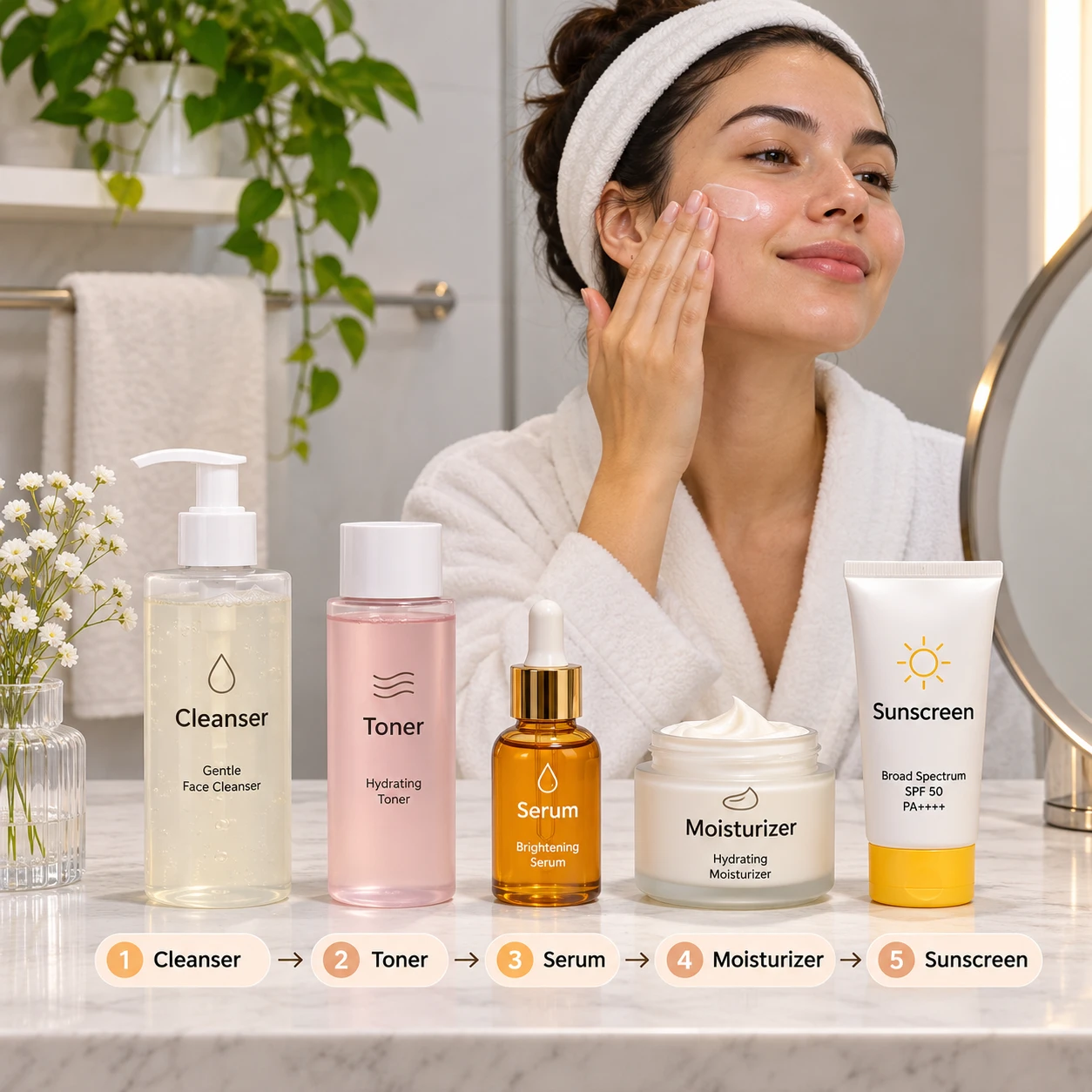
Layering skincare products correctly helps each step fit comfortably into your routine. A useful starting order is cleanser, lightweight treatment products, moisturizer, and sunscreen in the morning. At night, cleanse first, apply any chosen treatments, then moisturize.
That order is a guide, not a rule that every skin type must follow exactly. Product instructions, texture, active ingredients, and your skin’s sensitivity all matter. A short routine you can use consistently is often more practical than a crowded shelf of products.
The basic rule for layering skincare
Layer skincare from cleansing to treatment, then moisturizer; in the morning, finish with sunscreen. This order removes buildup, places leave-on products on clean skin, and helps seal in moisture.
Start with a cleanser suited to your skin, then apply leave-on products such as toner or serum if they serve a purpose in your routine. Follow with moisturizer to support the skin barrier. In daylight, sunscreen is the final skincare step before makeup.
The familiar “thinnest to thickest” rule can help when two leave-on products have similar instructions, but it is not absolute. Cleansers always come first because they are rinsed off, and sunscreen stays last because other products applied over it can disrupt its protective film. Follow the product label if it specifies a different application method.
You also do not need every product category. Toner is optional, and a serum is useful only when its ingredients address a need you have. Fewer, well-tolerated steps make it easier to spot what helps and what causes irritation.
Morning skincare order
A simple morning skincare routine is cleanser, optional toner or serum, moisturizer, then broad-spectrum sunscreen. Keep the number of steps manageable so you can apply sunscreen generously and evenly.
- Cleanse: Use a gentle cleanser, or rinse with water if your skin feels comfortable and your clinician has not advised otherwise.
- Apply toner or serum: Choose a leave-on product that suits your goals. A hydrating serum containing hyaluronic acid is one option; apply it according to its directions.
- Moisturize: Use a formula that feels comfortable and helps limit moisture loss. Some people with oily skin prefer a light lotion; others need a richer cream.
- Apply sunscreen: Finish with broad-spectrum sunscreen with SPF 30 or higher, following the label for the amount and reapplication. The American Academy of Dermatology Association provides practical guidance on sunscreen use.
If your moisturizer already contains sunscreen, check its SPF and directions and apply enough to achieve the labeled protection. Makeup with SPF can add coverage, but it may not replace a dedicated sunscreen if you use only a small amount.
Evening skincare order
An evening routine usually starts with cleanser, followed by selected treatment products and moisturizer. Nighttime is a convenient time for products such as retinol, but you can keep the routine basic on nights when your skin needs a break.
Remove makeup and sunscreen with a cleanser that cleans your skin without leaving it tight or uncomfortable. If one gentle cleanse does not remove your products, a two-step cleanse may help, but it is not essential for everyone. Avoid scrubbing or repeatedly washing to chase a “squeaky clean” feeling.
After cleansing, apply a treatment such as retinol or an exfoliating acid only if it is appropriate for your skin and product directions. Follow with moisturizer. If you are new to a treatment, use it on a limited schedule at first rather than layering several unfamiliar products on the same night.
A basic night can be just cleanser and moisturizer. That is a complete, reasonable routine, particularly if your skin feels irritated, dry, or sensitive. Rest nights are part of adjusting a routine, not a failure to use enough products.
How texture and product type affect the order
For most leave-on products, apply lighter, more fluid formulas before thicker creams. Product function and directions still take priority, with cleanser first and sunscreen last in the morning.
Watery toners and thin serums often spread more easily before a lotion or cream. A thicker moisturizer can reduce how readily a later product reaches the skin, so placing it after treatment products is a useful default. Still, formulas differ: a product’s label may give a specific sequence or advise applying it to dry skin.
Hyaluronic acid is a humectant used in many hydrating serums. Apply it as directed; some people prefer using it on slightly damp skin and following with moisturizer, while others find that approach uncomfortable in a dry environment. Let skin comfort guide you rather than treating one technique as universal.
Exceptions are easy to remember: rinse-off cleansers go first, and sunscreen is the final morning skincare layer. If makeup pills over sunscreen, allow the sunscreen to settle and apply makeup gently, rather than mixing the two products together.
Layering active ingredients safely
To reduce irritation, introduce active ingredients one at a time, start conservatively, and avoid combining multiple strong treatments until you know how your skin responds. Retinol and exfoliating acids can both irritate, especially when used too often or alongside other harsh products.
Retinol is a vitamin A derivative used in some skincare products. Follow its label, begin with a low frequency if you are new to it, and use moisturizer to support comfort. Retinoids are not suitable for everyone; ask a healthcare professional for advice if you are pregnant, trying to become pregnant, breastfeeding, or unsure whether a product is appropriate for you.
Exfoliating acids, including alpha hydroxy acids and beta hydroxy acids, loosen dead skin cells at the surface or within pores, depending on the ingredient. Start with one acid product at its labeled frequency. Using it on the same night as retinol may be too irritating for some people, so alternating nights is a cautious option rather than stacking both immediately.
- Introduce one new active product at a time and give your skin a chance to adjust before adding another.
- Do not apply a product more often than its directions allow.
- Reduce use or stop if you develop persistent burning, swelling, or significant redness; seek medical advice for severe or lasting reactions.
- Use sunscreen during the day, particularly when your routine includes ingredients that may increase sensitivity to sunlight.
More active ingredients do not guarantee faster or better results. The trade-off for a more intensive routine is a higher chance of irritation, which can make it harder to continue using products comfortably.
Common layering mistakes and how to fix them
Most layering problems come from using too many products, applying them in an unsuitable order, or combining treatments too quickly. Simplify the routine first, then change one variable at a time.
Using too many new products at once
Adding several products together makes it difficult to identify which one causes stinging, dryness, or breakouts. Introduce one new product at a time and keep the rest of your routine familiar. A patch test can help identify some reactions, but it cannot guarantee that a product will never irritate your face.
Applying products in thick-to-thin order
Putting a heavy cream under a watery serum can make the serum harder to spread evenly. Try applying leave-on products from lighter to thicker, unless the product directions say otherwise. Keep cleanser first and sunscreen last in the morning.
Rubbing or layering until products pill
Pilling can happen when formulas do not sit well together, when too much product is applied, or when layers are rubbed before they settle. Use smaller amounts, smooth products on gently, and allow each layer to absorb before continuing. You do not need to wait an exact number of minutes between every step.
Ignoring persistent stinging
A brief mild sensation can occur with some products, but ongoing burning is a reason to stop and reassess. Pause the newest active products and use a simple cleanser-moisturizer routine while your skin settles. Seek professional advice if symptoms are severe or do not improve.
Tailoring the order to your skin
Keep the basic sequence, then adjust the number and weight of products to your skin type and sensitivity. The right routine is the one your skin tolerates and you can follow consistently.
- Dry skin: Choose a gentle cleanser and a richer moisturizer. A hydrating serum may be useful, but it should not replace moisturizer if your skin still feels dry.
- Oily skin: Try a lightweight lotion or gel moisturizer if it feels comfortable. Oily skin still benefits from moisturizing; skipping it is not necessary for everyone.
- Sensitive skin: Keep the routine short, choose products with fewer potential irritants, and introduce retinol or exfoliating acids cautiously—or skip them if they trigger symptoms.
- Combination skin: Use lighter products where your skin gets oily and a richer moisturizer on dry areas, if needed. You do not have to apply every product in the same amount across your face.
Skin type can shift with weather, age, medication, and other factors. If a routine starts causing persistent irritation, scale it back rather than adding another product to counteract the reaction.
Frequently asked questions
Most layering questions come down to product instructions, skin comfort, and keeping sunscreen as the final morning skincare step. These quick answers cover the usual sticking points.
Do you need to wait between skincare products?
Usually, no exact waiting time is required. Let a layer settle enough to apply the next without excessive rubbing; follow the label if it gives a specific wait time.
Should serum go before or after moisturizer?
Serum usually goes before moisturizer because it is often lighter and designed as a leave-on treatment. Check the formula’s directions, especially if it has a particular application method.
Can you use retinol and exfoliating acids together?
Some people may tolerate both, but using them together can increase irritation. If you are new to either, introduce one at a time and consider alternating nights rather than applying both in the same routine.
Does sunscreen go on before or after moisturizer?
Apply sunscreen after moisturizer as the final skincare step in the morning. Give it time to form an even layer before applying makeup, and follow the label for reapplication.