DIY Face Masks Using Ingredients Already in Your Kitchen
Your kitchen is hiding a surprisingly capable skincare cabinet. Honey, oatmeal, avocado, Greek yogurt — these aren't just pantry staples. They contain active compounds that genuinely interact with skin at a functional level. The growing clean beauty movement has brought this idea into the mainstream, but the practice itself is centuries old.
This guide gives you practical, skin-type-specific recipes you can make today, along with the context to use them safely and effectively.
Why Kitchen Ingredients Work for Your Skin
Many kitchen ingredients contain bioactive compounds — humectants, antioxidants, and gentle acids — that have real effects on skin when applied topically. This isn't folk wisdom dressed up as science; there's a meaningful body of research supporting several of these ingredients.
Honey, for example, is a well-documented humectant and antibacterial agent. Its low pH and hydrogen peroxide content give it antimicrobial properties that have been studied in wound care contexts. Oatmeal contains beta-glucans and avenanthramides — compounds shown to reduce skin inflammation and reinforce the skin barrier. Turmeric's active compound, curcumin, is a potent antioxidant with demonstrated anti-inflammatory effects.
The appeal of natural skincare isn't just about avoiding synthetic ingredients. It's also about accessibility, cost, and the ability to customize formulas to your exact skin concern. A store-bought brightening mask might cost $30 and contain a dozen ingredients you don't need. A turmeric and yogurt mask costs pennies and addresses the same concern with fewer variables.
That said, "natural" doesn't mean "risk-free." Citrus juice, for instance, can cause photosensitivity. Dairy can trigger reactions in some people. The sections below flag these concerns where they matter.
Know Your Skin Type Before You Mix
Matching ingredients to your skin type is the single most important step in DIY skincare. Using the wrong mask — even with gentle ingredients — can worsen the problem you're trying to solve.
Here's a quick framework for self-identification:
- Dry skin: Feels tight after cleansing, may flake or look dull. Needs occlusive and humectant ingredients like avocado and honey.
- Oily skin: Shines within an hour of washing, prone to enlarged pores and breakouts. Benefits from ingredients that regulate sebum without stripping — turmeric, yogurt, diluted honey.
- Sensitive skin: Reacts easily to new products, may experience redness, itching, or stinging. Needs minimal, fragrance-free, anti-inflammatory ingredients like plain oatmeal.
- Combination skin: Oily in the T-zone (forehead, nose, chin), drier on cheeks. Can benefit from zone-specific application — a clarifying mask on the T-zone, a hydrating one on the cheeks.
If you're genuinely unsure of your skin type, a simple test: wash your face with a gentle cleanser, pat dry, and wait 30 minutes without applying anything. What you see and feel at that point is your baseline skin behavior.
Hydrating Masks for Dry Skin
Dry skin needs ingredients that either lock in moisture (occlusives) or draw water into the skin (humectants). Avocado and honey do both.
Avocado and Honey Mask
This is one of the most effective two-ingredient masks for dry or flaky skin. Avocado is rich in oleic acid and linoleic acid — fatty acids that penetrate the upper layers of skin and support the lipid barrier. Honey adds humectant action, pulling moisture from the air into the skin.
- ½ ripe avocado, mashed until smooth
- 1 tablespoon raw honey
Mix well, apply to clean skin, and leave on for 15–20 minutes. Rinse with lukewarm water. Skin should feel noticeably softer immediately after removal.
Oatmeal and Greek Yogurt Mask
This combination works particularly well for dry skin that's also a little sensitive or reactive. Oatmeal soothes and reduces redness while forming a gentle physical barrier. Greek yogurt contributes lactic acid — a mild alpha-hydroxy acid that loosens dead skin cells without the harshness of stronger exfoliants.
- 2 tablespoons finely ground rolled oats (blend briefly if needed)
- 2 tablespoons plain, full-fat Greek yogurt
Combine into a paste, apply evenly, and leave on for 10–15 minutes. The lactic acid in yogurt means you don't need to leave it on longer — more time doesn't equal more exfoliation here.
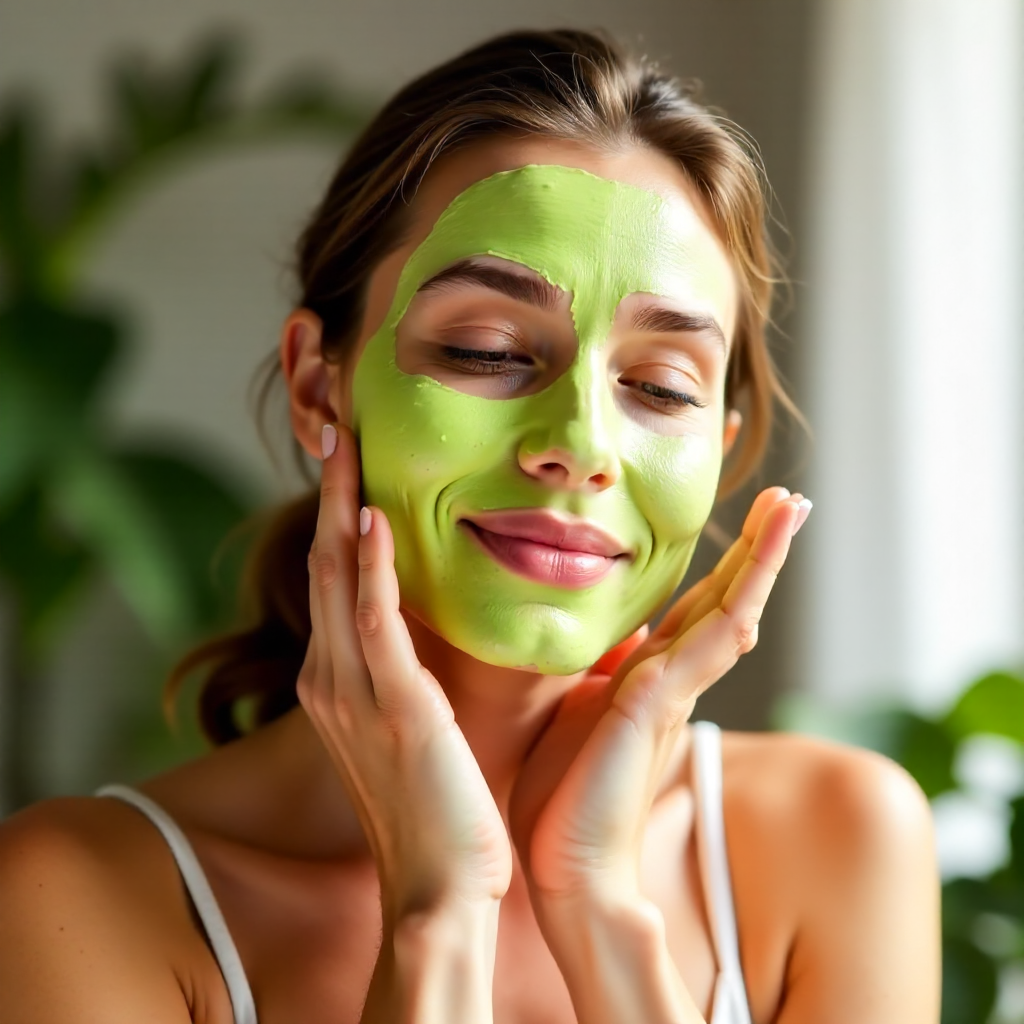
Clarifying Masks for Oily and Acne-Prone Skin
For oily and acne-prone skin, the goal is to reduce excess sebum, minimize the appearance of pores, and address bacteria — without disrupting the skin barrier so much that it overproduces oil in response.
Turmeric and Greek Yogurt Mask
This is a well-regarded combination in natural skincare circles, and for good reason. Turmeric's curcumin content gives it brightening and anti-inflammatory properties, which is useful for post-breakout hyperpigmentation. Greek yogurt provides gentle exfoliation and has a skin-compatible pH.
- 1 teaspoon turmeric powder
- 2 tablespoons plain Greek yogurt
Mix thoroughly. Apply a thin, even layer and leave on for 10 minutes. Rinse well — turmeric can temporarily stain skin yellow, so use a washcloth and expect to see some color in the water. The staining fades quickly.
Honey and Lemon Mask
Honey's antibacterial properties pair with lemon juice's vitamin C content and natural acidity to create a clarifying mask. However, lemon juice requires caution. Undiluted citrus on skin can cause irritation, and using it before sun exposure increases the risk of photosensitivity and pigmentation.
- 1 tablespoon raw honey
- ½ teaspoon fresh lemon juice (no more)
Apply only at night, avoid broken or inflamed skin, and always follow with SPF the next morning. If you have reactive skin, skip the lemon entirely — honey alone still delivers meaningful antibacterial benefit.
Soothing Masks for Sensitive Skin
Sensitive skin does best with the fewest ingredients possible. Every additional component is another potential irritant. The recipes here are intentionally minimal.
Plain Oatmeal Mask
Colloidal oatmeal (finely ground oats suspended in water) is recognized by the FDA as a skin protectant for conditions like eczema and contact dermatitis. That's a meaningful distinction — it's one of the few kitchen ingredients with that level of regulatory acknowledgment. For a simple soothing mask, you don't need anything else.
- 3 tablespoons finely ground oats
- Enough warm water to form a paste
Apply gently to clean skin, leave on for 10 minutes, then rinse with cool water. No rubbing — let the oatmeal do its work passively.
Honey Alone
Raw honey applied directly to skin is one of the safest single-ingredient masks available. It won't strip the barrier, it won't cause photosensitivity, and its natural sugars provide gentle hydration. Apply a thin layer, leave on for 15 minutes, and rinse. That's it. Sometimes the simplest option is the right one.
How to Apply, Time, and Remove Your DIY Mask Safely
Safe application matters as much as the recipe itself. A good mask used incorrectly can cause irritation, breakouts, or worse.
Patch testing is non-negotiable, especially with new ingredients. Apply a small amount of the mask mixture to the inside of your wrist or behind your ear. Wait 24 hours. If there's no redness, itching, or swelling, you're likely safe to proceed with a full application.
A few practical rules for application:
- Always start with a clean face — residual makeup or SPF can interfere with ingredient absorption and cause clogged pores.
- Apply with clean fingers or a brush; avoid double-dipping into the mixture to prevent contamination.
- Avoid the eye area and any broken, inflamed, or actively irritated skin.
- Most masks work best in the 10–20 minute window. Leaving them on longer rarely adds benefit and can cause dryness or irritation.
- Remove with lukewarm water and a soft cloth — never scrub.
After rinsing, follow with your usual moisturizer while skin is still slightly damp. This seals in the hydration the mask has introduced.
Incorporating DIY Masks into Your Weekly Skincare Routine
DIY face masks work best as a complement to a consistent skincare routine, not a replacement for it. Think of them as a weekly treatment — a targeted boost layered on top of your daily cleanser, moisturizer, and SPF.
For most skin types, once or twice a week is the right frequency. Oily skin can handle up to twice weekly; sensitive skin may do better with once every 7–10 days. More frequent use, particularly with exfoliating ingredients like lactic acid or lemon juice, risks over-stripping the skin barrier.
A simple framework for integrating masks into your week:
- Sunday: Hydrating mask (avocado + honey) as a weekly reset before the workweek
- Wednesday or Thursday: Clarifying or brightening mask if your skin needs it mid-week
DIY skincare is genuinely satisfying — there's something grounding about mixing your own treatment from real, recognizable ingredients. But it works best when it's part of a broader routine that includes reliable daily products. A well-formulated cleanser, a consistent moisturizer, and daily SPF will always do more for your skin than any single mask, however good the recipe.
Frequently Asked Questions
Can I use lemon juice directly on my face?
Undiluted lemon juice applied directly to skin is not recommended. Its high acidity can disrupt the skin's pH, cause irritation, and increase photosensitivity — meaning sun exposure after application raises the risk of pigmentation and burns. If you use it at all, dilute it significantly (as in the honey and lemon recipe above), apply only at night, and always wear SPF the following day.
How long should I leave a DIY face mask on?
Most homemade masks are most effective in the 10–20 minute range. Hydrating masks (avocado, honey) can sit for up to 20 minutes. Exfoliating masks with lactic acid (yogurt-based) should stay on no longer than 10–15 minutes. Leaving any mask on until it fully dries and cracks can actually draw moisture out of skin rather than adding it.
How often should I use a homemade face mask?
Once or twice per week is appropriate for most people. Sensitive skin types should start with once every 7–10 days and assess how their skin responds before increasing frequency. Exfoliating masks should never be used daily.
Are kitchen face masks safe for sensitive skin?
Some are, with the right ingredient choices. Plain oatmeal and raw honey are among the gentlest options available. Avoid citrus, strong spices (beyond a small amount of turmeric), and dairy if you have known sensitivities. Always patch test 24 hours before full application, regardless of how mild an ingredient seems.
Can I store leftover face mask mixture?
Most homemade masks should be used immediately. Without preservatives, fresh ingredients like avocado and yogurt oxidize and spoil quickly at room temperature. If you must store a small amount, refrigerate it in an airtight container and use within 24 hours. Discard anything that smells off or changes color.