Clean Beauty Myths Debunked: What Skincare and Makeup Shoppers Should Know
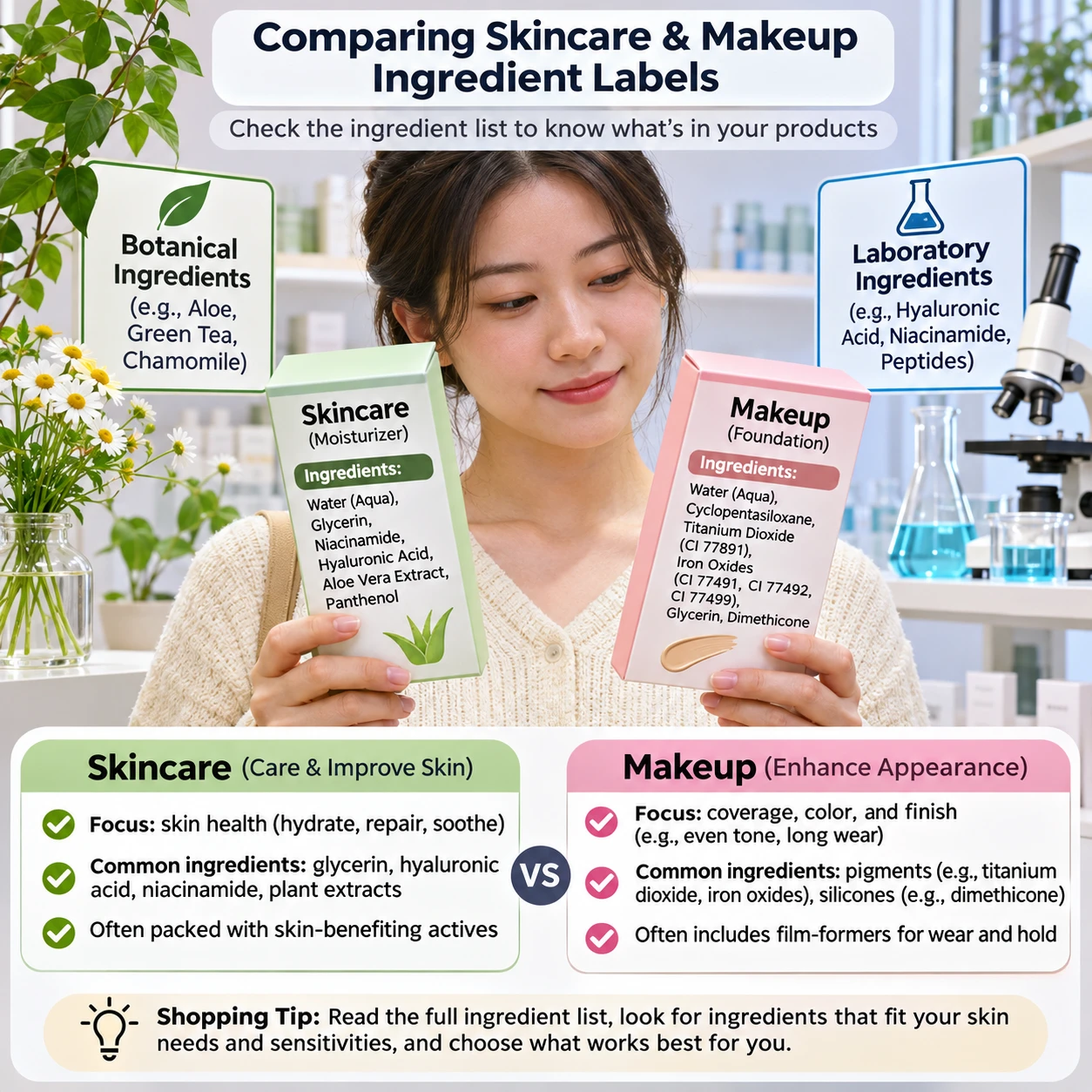
Clean beauty can make shopping feel more complicated than it needs to be. One brand may call a formula clean because it avoids certain ingredients; another may use the term to describe its sourcing or packaging. Neither label, by itself, tells you whether a product is safe, effective, or right for your skin.
To make informed choices, separate three questions: what an ingredient is, how the finished formula is made, and how your skin responds. Here are four common clean beauty myths, fact-checked without fear-based ingredient rules.
What Does “Clean Beauty” Actually Mean?
Clean beauty has no single, universally agreed definition for skincare and makeup. Brands and retailers set their own standards, so the word can refer to different ingredient exclusions, sourcing practices, or marketing positions.
That variation matters. A product described as clean might avoid fragrance, certain preservatives, or ingredients on a brand’s restricted list. Another might focus on plant-derived ingredients or sustainability. These policies can help shoppers narrow options, but they are not a universal product-safety rating or a guarantee that every person will tolerate the formula.
In the United States, the Food and Drug Administration (FDA) does not define “clean beauty” as a specific cosmetic category. Cosmetic products and ingredients are subject to applicable laws, but the word clean does not replace ingredient information or establish that a product is safer or more effective. You can consult the FDA’s [cosmetics overview](https://www.fda.gov/cosmetics) for information about cosmetic regulation and consumer safety.
When you see a clean beauty claim, ask what it means in that particular context. Look for the brand’s ingredient policy and whether it explains why ingredients are excluded. Treat the label as a description of the brand’s choices, not as proof that other formulas are “dirty” or harmful.
Myth 1 — Natural Ingredients Are Always Safer
Natural origin does not automatically make an ingredient safer or gentler. Its suitability depends on the ingredient, its concentration and form, the finished formula, and your individual skin sensitivity.
Plant extracts and essential oils can contain compounds that irritate some people or trigger allergic contact dermatitis. Fragrance is another consideration: it may come from natural sources, be made from synthetic materials, or combine both. For someone who reacts to a particular fragrance component, its origin does not remove the possibility of a reaction.
Likewise, “natural” does not tell you how an ingredient behaves in a finished product. A botanical extract in a well-designed formula may suit your skin, while a different natural ingredient may not. Product claims and ingredient names alone cannot predict every individual response.
If your skin is sensitive, focus on what you have reacted to before, rather than assuming all botanical skincare is gentle. Introduce one new product at a time and consider testing it on a small area according to the product’s directions. Stop using it if you develop a concerning reaction; persistent or severe symptoms warrant advice from a qualified healthcare professional.
Myth 2 — Synthetic Ingredients Are Automatically Harmful
“Synthetic” describes an ingredient’s origin or how it is made, not whether it is inherently harmful. Safety and suitability depend on the specific substance, how it is used, and the complete product formulation.
Cosmetic formulas can include both naturally derived and synthetic ingredients. A synthetic ingredient may serve a practical purpose such as improving texture, keeping a formula stable, or helping a product perform consistently. Natural ingredients can have useful functions, too. Neither label alone tells you how well the finished product will suit your skin.
Instead of sorting ingredients into “natural good” and “synthetic bad,” consider the product’s intended use and your own experience. A cleanser, sunscreen, foundation, and eye-area product serve different purposes, and their formulas need to work in different ways. A formula’s performance, directions, and ingredient list provide more useful context than a simple origin label.
There is a trade-off to broad ingredient bans: they can make a shopping list easier to follow, but may also rule out products for reasons that do not apply to your skin. If you know you react to a specific ingredient, avoiding it can be reasonable. If you have no such history, a synthetic ingredient is not automatically a reason to reject a product.
Myth 3 — Clean Products Don’t Need Preservatives
Some clean beauty products contain preservatives, and certain formulas need protection from contamination. Whether a preservative is appropriate depends on the formula, packaging, and product design.
Products that contain water can provide conditions in which microorganisms may grow. Preservatives help protect some formulations during their intended use and can help prevent contamination from undermining product quality. The exact approach depends on the product; a water-free formula, for example, may have different preservation needs from a water-based lotion.
Preservatives are not interchangeable, and their presence does not make a product automatically suitable for every user. As with other skincare ingredients, individual sensitivity is possible. But avoiding preservatives as a blanket rule can also have a downside: it may leave you choosing a formula without understanding how its design addresses product stability and contamination.
Packaging and use matter, too. Follow storage instructions, keep containers closed, and avoid adding water or using a product in ways the label does not recommend. If a product changes in appearance, smell, or texture, stop using it and check the manufacturer’s guidance rather than relying on a clean beauty claim.
Myth 4 — “Free From” Labels Prove a Product Is Better
A “free from” label tells you what a product excludes, not that it is superior overall. Exclusions can be useful when they address your specific preferences or known sensitivities, but the claim needs context.
For example, a fragrance-free product may be a practical option for someone who wants to avoid added fragrance. It still contains other ingredients, and no label can guarantee that every person will tolerate it. Similarly, a product that advertises the absence of a particular ingredient is not automatically safer, more effective, or more suitable than one that contains it.
Marketing language can make an exclusion sound like a warning about every product that includes that ingredient. Resist that leap. Ask whether the claim explains the brand’s criteria and whether the ingredient matters to your needs. Ingredient lists, directions, and the product’s intended use are more informative when considered together.
A useful rule is to treat “free from” as a filter, not a verdict. If you are avoiding an ingredient because of a personal reaction or a professional recommendation, the claim may help you shortlist products. If it is simply a broad marketing message, it may offer little guidance about how the formula will work for you.
How to Choose Skincare and Makeup More Confidently
Choose skincare and makeup by matching the formula to your needs, known sensitivities, and intended use. Read the full label, treat marketing claims as context, and assess how the product works for you rather than relying on a clean beauty label alone.
A quick label check can help you make a more grounded decision:
- Start with the job. Decide whether you need hydration, cleansing, coverage, or another specific function before comparing ingredient claims.
- Check your personal triggers. If you know a particular fragrance or ingredient causes a reaction, look for it on the ingredient list. Avoid assuming that every ingredient in a broad category affects you the same way.
- Read the whole list. A front-label claim highlights selected features; the ingredient list gives a fuller view of the formula. If a name is unfamiliar, seek reliable information instead of judging it by how natural or technical it sounds.
- Follow directions and packaging guidance. Use products as intended and observe any storage instructions, especially for formulas that may be affected by handling.
- Introduce products thoughtfully. Add one new item at a time so it is easier to notice whether your skin responds poorly. For recurring reactions, ask a dermatologist or other qualified clinician about appropriate evaluation.
Consider a shopper choosing a new foundation after experiencing irritation from a scented face cream. Rather than rejecting every synthetic ingredient, they could check the foundation’s fragrance information, review the ingredient list for known triggers, and try the product cautiously before making it part of a daily routine. That process is more personal and useful than relying on a general clean claim.
There is no need to memorize every skincare ingredient or follow a perfect shopping rule. Clean beauty can be one preference among many, alongside shade match, texture, cost, performance, and packaging. The clearest approach is to use labels as information, not as a substitute for evidence or your own skin’s experience.
Clean Beauty FAQs
Is clean beauty a regulated term? There is no single, universally agreed definition of clean beauty. Brand standards vary, so check what a specific company means by the claim.
Are natural skincare ingredients safer? Not automatically. Natural ingredients can irritate or cause allergic reactions, just as individuals may react to other ingredients.
Do clean beauty products contain preservatives? Some do. Preservative needs depend on the formula and product design; the clean label alone does not tell you whether one is present.
How can I tell whether an ingredient may irritate my skin? Review the ingredient list for substances you already know you react to, introduce products cautiously, and seek professional guidance for repeated or serious reactions.